
Running a hospital is not just about advanced technology, expert doctors, and modern infrastructure. At the heart of every successful healthcare organization lies a disciplined, motivated, and accountable workforce. However, many hospital administrators face a common challenge—staff not performing to their full potential. When employees ignore protocols, arrive late, neglect patient care standards, or fail to follow systems, the hospital environment can quickly shift from organized operations to operational chaos.
The real question is: How can hospital leadership bring order, accountability, and consistent performance from their staff?
One of the most powerful answers lies in a simple yet highly effective principle: linking employee performance directly with their salary through Key Performance Indicators (KPIs).
THE MOST POWERFUL MOTIVATOR IN THE WORKPLACE
Across industries and cultures, one factor consistently influences employee behavior more than anything else—money. While appreciation, recognition, and a good work environment matter, the financial component of compensation remains the strongest motivator for most employees.
In many hospitals, staff salaries are fixed regardless of their performance. Whether an employee works sincerely or performs poorly, the salary often remains unchanged. This structure unintentionally encourages mediocrity because there is little financial consequence for poor performance and limited reward for excellence.
INTRODUCING KPI-BASED SALARY STRUCTURE
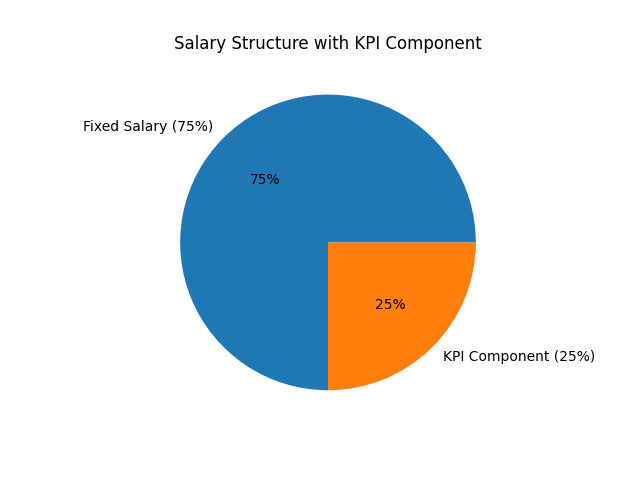
A practical strategy is to divide an employee’s salary into two parts:
• Fixed Salary Component – 75%
• KPI-Based Performance Component – 25%
For example, if the planned salary for a particular role is X, then:
75% of X will be fixed salary, and 25% will be KPI-based incentives.
This means one-fourth of the salary depends on how well the employee performs their responsibilities.
DESIGNING SMART KPI ALLOWANCES
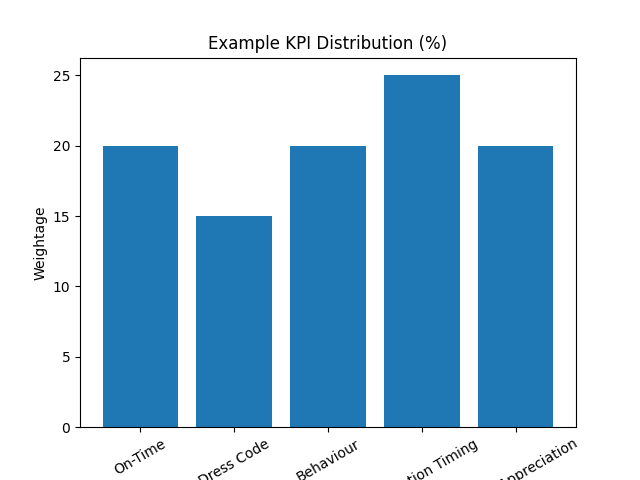
The KPI component of salary can be divided into different performance-based allowances such as:
• On-Time Allowance
• Dress Code Allowance
• Behaviour Allowance
• Medication-on-Time Compliance
• Patient Appreciation Allowance
• Department-Specific KPIs
Hospitals can design KPIs according to each employee’s role and responsibility.
ACCOUNTABILITY THROUGH FINANCIAL IMPACT
If an employee performs well and meets all KPI standards, they receive the full salary including performance allowances. However, if performance drops or protocols are not followed, the respective allowances are automatically deducted according to predefined conditions.
This system encourages discipline and accountability because employees understand that their income is directly connected to their performance.
THE ROLE OF AI AND HIMS SYSTEMS
Modern hospitals can integrate this KPI system with a Hospital Information Management System (HIMS) powered by Artificial Intelligence. The system can automatically track:
• Attendance and punctuality
• Task completion
• Medication administration records
• Patient feedback
• Departmental performance indicators
All calculations are done automatically by the system. There is no human intervention, which eliminates bias, favoritism, or partiality.
TRANSFORMING HOSPITAL CULTURE
When performance-based compensation is implemented with transparent AI systems, hospitals experience a cultural transformation. Employees become more disciplined, responsible, and focused on patient care.
Ultimately, the hospital environment becomes more organized, efficient, and patient-centered.
CONCLUSION
Managing underperforming hospital staff does not always require strict supervision or punishments. Often the best solution is building a system where performance naturally aligns with incentives. By linking 25% of salary with KPIs and monitoring them through AI-integrated HIMS systems, hospitals can create a fair, transparent, and performance-driven work culture.
The result is clear: better staff discipline, improved patient satisfaction, and a hospital environment that moves truly from chaos to control.
Graphical Representation
1. Salary Structure with KPI-Based Component
2. Example KPI Performance Distribution