
Introduction
Healthcare is evolving rapidly, but one thing in hospitals has remained almost unchanged for years — the way hospital information is managed. Most hospitals today use a Hospital Information Management System (HIMS), but many still depend heavily on manual data entry, repetitive documentation, and time‑consuming processes.
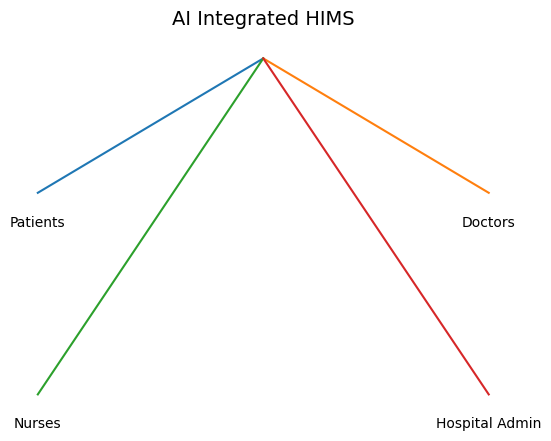
In a busy hospital environment, time is the most valuable resource. Doctors are rushing between patients, nurses manage multiple responsibilities, and administrative staff handle large volumes of paperwork. Even a small delay in documentation can affect workflow and patient experience.
This is where Artificial Intelligence (AI) integration with HIMS can transform the entire hospital ecosystem. AI does not replace doctors or nurses; instead, it reduces repetitive work, improves accuracy, and allows healthcare professionals to focus more on patient care rather than paperwork.
How AI Integration Helps Patients and Hospitals
When AI becomes part of the hospital information system, the benefits extend to both patients and healthcare providers. For patients, the biggest advantages are speed, convenience, and better clinical care. Long waiting times for registration and documentation can be reduced significantly. AI allows hospitals to process information faster and provide quicker services.
For hospitals, AI improves operational efficiency and decision‑making. When routine processes become automated, staff productivity increases and management receives real‑time analytics that help improve operations.
Aadhaar Enabled Patient Registration
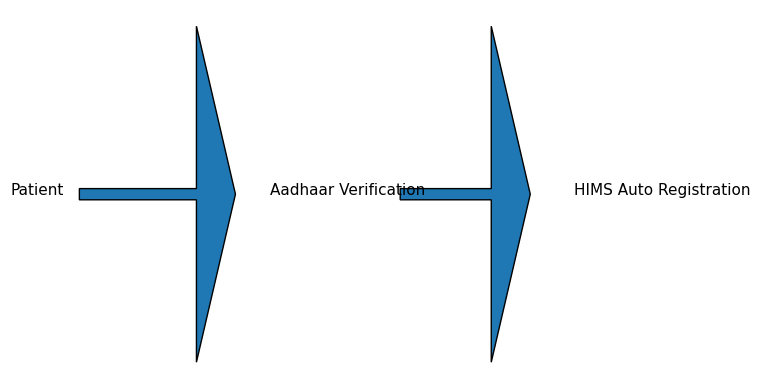
One of the most time‑consuming processes in hospitals is new patient registration. Staff members manually enter demographic details such as name, address, mobile number, age, and gender.
By integrating Aadhaar authentication with HIMS, the system can automatically fetch patient demographic details securely and populate registration fields instantly. This can reduce the registration time from 5–6 minutes to just 30–60 seconds while also minimizing human errors.
Voice Enabled Nursing Documentation
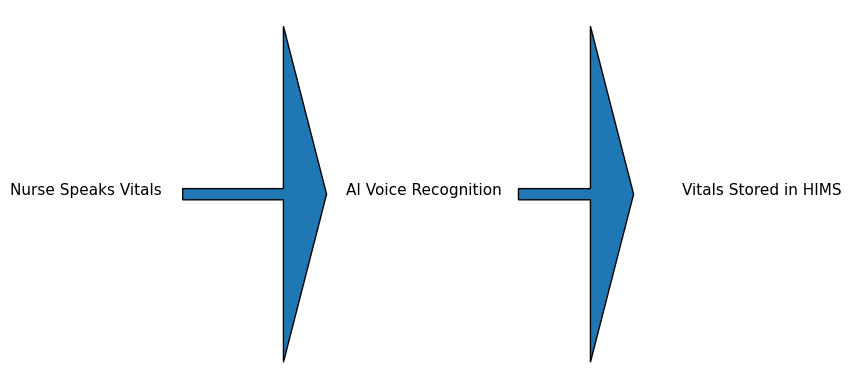
Nurses spend significant time recording vital parameters such as blood pressure, pulse rate, temperature, oxygen saturation, and respiratory rate.
With an AI powered voice system integrated into HIMS, nurses can simply select the patient on a mobile device and speak the readings aloud. The system automatically records and updates the vitals in the patient’s electronic medical record.
This saves time, reduces typing workload, and allows nurses to focus more on patient care.
AI Assisted OPD Consultation
AI systems can listen to conversations between doctors and patients (with consent and privacy safeguards) and automatically create structured consultation notes. The system can generate digital prescriptions and record tests and medicines advised by the doctor.
Doctors only need to review and approve the prescription, saving valuable consultation time.
AI for Infection Control Monitoring
AI enabled cameras integrated with HIMS can help monitor infection control practices such as hand hygiene compliance, staff movement, and medication administration timing. Hospitals can receive data driven reports and alerts which help reduce Hospital Acquired Infections (HAI).
Predictive Patient Monitoring
AI can continuously analyze patient vitals and clinical data to identify early warning signs of deterioration. Subtle changes in parameters such as heart rate, oxygen levels, or blood pressure can alert doctors before the patient’s condition becomes critical.
This predictive capability can significantly improve patient outcomes and hospital response time.
Conclusion
AI integration in HIMS is not just a technological upgrade but a transformation in hospital workflow. By automating routine processes and providing intelligent clinical insights, hospitals can improve efficiency while allowing healthcare professionals to spend more time with patients.
The future hospital will not only be digital — it will be intelligent.